

Le Comité Scientifique d'ATEurope
Sans ces éminents médecins et chercheurs qui donnent de leur temps bénévolement et sans compter, ATEurope ne pourrait rien faire! Choisir les projets à financer en identifiant les pistes les plus intéressantes, analyser les publications scientifiques, les dangers de certains essais cliniques et le suivi de ceux qui sont réellement pertinents, tel est le rôle essentiel des membres de ce comité que nous ne remercierons jamais assez de nous suivre aussi fidèlement.

Dominique Stoppa-Lyonnet
GÉNÉTIQUE
La Pr. Dominique Stoppa-Lyonnet est professeur de génétique médicale à l'Université de Paris et responsable du Service de Génétique de l’Institut Curie. Elle a développé avec son équipe le diagnostic génétique de l’ataxie-télangiectasie. Elle est présidente de notre comité scientifique.
En savoir plus
Travaux:
Les travaux de Dominique Stoppa-Lyonnet portent principalement sur les prédispositions génétiques aux cancers, particulièrement aux cancers du sein et de l'ovaire et au rétinoblastome. Son équipe réalise plus de 5000 consultations de génétique par an. Ses travaux ont pour objectifs:
- d'identifier des facteurs génétiques de prédisposition aux cancers,
- de contribuer à la définition du suivi des personnes à haut risque de cancer,
- d'optimiser les méthodes de détection des altérations génétiques.
Elle est notamment à l'origine de l'étude CoF-AT qui vise à déterminer le lien entre le gène ATM et le risque de cancers.
Son laboratoire étudie également le gène ATM chez des enfants dont le diagnostic d'Ataxie-Télangiectasie est suspecté sans être confirmé et chez les parents d'un premier enfant atteint ayant un projet parental. Il réalise près d'une quinzaine de diagnostics prénatals par an.
Cette compétence fait de Dominique Stoppa-Lyonnet une des meilleures spécialistes du gène ATM au monde.
Instances:
Elle a été membre du comité oncogénétique de l’Institut National du Cancer, du conseil médical et scientifique de l’Agence de la Biomédecine, du Comité Consultatif National d'Ethique. Elle est membre du conseil d’administration de la Ligue contre le Cancer. Elle est présidente du conseil scientifique et éthique de SeqOIA dans le cadre du Plan France Médecine Génomique 2025.
Distinctions:
Chevalier de la Légion d'Honneur (2006), Dominique Stoppa-Lyonnet a reçu de nombreux prix scientifiques parmi lesquels celui de l'Académie Nationale de Chirurgie (2002), prix Henry et Mary-Jeanne Mitjaville de l'Académie de Médecine (2007), Prix de communication Jean Bernard de la Fondation pour la Recherche Médicale (2014).

Alain Fischer
IMMUNOLOGIE
Le Pr. Alain Fischer est un pionnier des thérapies géniques, le créateur du CEREDIH et à l'origine de la Fondation « Imagine » qui a donné naissance en 2013 à l'Institut des maladies génétiques dont il a été directeur jusqu'en 2016.
Il est actuellement président de l'académie des sciences pour 2023-2024.
En savoir plus
Travaux:
Les travaux d'Alain Fischer ont permis une meilleure compréhension du développement et des fonctions du système immunitaire et la caractérisation des bases moléculaires et de la physiopathologie de plusieurs maladies héréditaires du système immunitaire, ainsi que la mise au point de plusieurs modalités thérapeutiques de ces maladies.
Il a été le premier au monde à réussir une thérapie génique en 2000, pour soigner les enfants « bulles ».
Instances:
Le Pr. Fischer est actuellement membre des conseils de la Fondation pour la Recherche Médicale, de la Fondation Edmond de Rothschild-Institut de Physique Chimie et Biologie et de la Fondation Bettencourt Schueller.
Il participe aux conseils scientifiques de la Fondation Jeantet, de la Fondation pour la Recherche Médicale, de la Fondation des Maladies Rares et de l'Institut Curie et fait profiter de son expertise les comités de rédaction de grandes revues scientifiques internationales (JACI, Immunological reviews, Annual Review of Immunology).
Il est par ailleurs membre de l'Académie des Sciences, de l'Académie française de médecine, de l'Institut de France et, à l'étranger, de l'European Molecular Biology Organisation (EMBO) et des Académies Nationales de Médecine de Belgique et des USA.
Enfin, de nombreuses sociétés savantes, telles l'Institut Pasteur ou l'Institut Max Planck (Allemagne), des administrations (ministères de la Santé, ville de Paris) ou encore des associations (AFM-Téléthon) ont fait appel à ses compétences.
Distinctions:
Officier de la Légion d'Honneur et de l'Ordre National du Mérite, il a reçu de nombreux prix dont le prix Descartes de la Communauté Européenne et le Grand prix Inserm de la recherche médicale.

Alexandra Durr
NEUROGÉNÉTIQUE
La Pr. Alexandra Durr est une neurogénéticienne spécialiste des maladies spinocérébelleuses.
Elle coordonne le Centre de Référence Maladies Rares Neurogénétique, dont la consultation est dédiée aux ataxies avec son équipe clinique et psychologique (Pr Gargiulo, Drs Ewenczyk, Coarelli, Charles et Heinzmann et Mmes Staraci et Schaerer).
En savoir plus
Travaux:
Professeure à Sorbonne Université et Praticienne hospitalière dans le Département de Génétique, elle assure des consultations de Neurogénétique (suivi et conseil génétique des maladies neurologiques héréditaires, diagnostic prédictif et consultations pluridisciplinaires).
Ses travaux ont contribué à dénombrer et comprendre les relations phénotype-génotype dans le domaine des maladies neurodégénératives d'origine génétique. Ils conduisent maintenant à des essais thérapeutiques dans plusieurs maladies.
Publications récentes comme auteur correspondant : Barnat M, Capizzi M, Aparicio E, et al. Huntington's disease alters human neurodevelopment. Science. 2020;369(6505):787-793.
Roux T, Barbier M, Papin M, et al. Clinical, neuropathological, and genetic characterization of STUB1 variants in cerebellar ataxias: a frequent cause of predominant cognitive impairment [published online ahead of print, 2020 Jul 27]. Genet Med. 2020;10.1038/s41436-020-0899-x.
Parodi L, Fenu S, Barbier M, et al. Spastic paraplegia due to SPAST mutations is modified by the underlying mutation and sex. Brain. 2018;141(12):3331-3342.
Instances:
Alexandra Durr co-dirige l’équipe de recherche (BTN : Basic to Translational Neurogenetics) à l’institut du Cerveau (https://institutducerveau-icm.org/fr/) dont la recherche est centrée sur les maladies neurogénétiques héréditaires, telles que les ataxies cérébelleuses, paraparésies spastiques et la maladie de Huntington. Elle est coordonne le réseau SPATAX crée en 2001 (réseau des formes héréditaires de dégénérescences spinocérébelleuses avec 40 équipes internationales de 30 pays https://spatax.wordpress.com). Elle est membre du comité de pilotage de SCA global https://ataxia.org/sca-global/ , un projet international dévolue aux ataxies. Elle est par ailleurs présidente du conseil médical et paramédical des associations ASL, CSC, et AFAF.

Nizar Mahlaoui
IMMUNOLOGIE
Le Dr Nizar Mahlaoui est médecin pédiatre (service d’immuno-hématologie et rhumatologie pédiatrique) et responsable du centre de référence des déficits immunitaires héréditaires (DIH) de l’enfant et de l’adulte (CEREDIH) à l’hôpital universitaire Necker-Enfants Malades (Paris).
En savoir plus
Il est ainsi responsable de la base de données française de l'Ataxie Télangiectasie gérée par le CEREDIH et financée par ATEurope. De plus, le nombre élevé de ses consultations d'enfants et d'adolescents atteints d'AT en fait un spécialiste de la prise en charge de la maladie.
Il est membre du conseil scientifique de l’association française des patients DIH (IRIS), ancien « Chair » du Registre européen des DIH (ESID) et « Chair » du Board médical de l’association mondiale des patients DIH (IPOPI).
Nizar Mahlaoui est également le créateur et le responsable médical de « La Suite », le programme transition de la pédiatrie vers la médecine adulte pour les patients suivis à l’hôpital universitaire Necker-Enfants malades pour une maladie rare ou une maladie chronique, comprenant notamment un espace de soins innovants dédiés à ces adolescent-jeunes adultes en cours de transition et la première application mobile dédiée à la transition.

Vincent Laugel
NEUROLOGIE
Le Pr Vincent Laugel est neuro-pédiâtre, responsable du pôle médico-chirurgical de pédiatrie des Hôpitaux Universitaires de Strasbourg. Dans ses activités de soins, Vincent Laugel est essentiellement impliqué dans la prise en charge des maladies neuro-génétiques rares de l’enfant.
En savoir plus
Il est le médecin coordonnateur du centre de référence des maladies mitochondriales et le coordonnateur pédiatrique du centre de référence des maladies neuromusculaires.
En recherche fondamentale et translationnelle, Vincent Laugel dirige un groupe de recherche sur les maladies de la réparation et de la transcription de l’ADN au sein du laboratoire de génétique médicale (Centre de Recherche en Biomédecine de Strasbourg). Dans ce cadre, ses travaux ont contribué à la compréhension des mécanismes du syndrome de Cockayne et à l’amélioration des outils diagnostiques.
Vincent Laugel participe par ailleurs au développement clinique de thérapies géniques pour la myopathie de Duchenne et l’amyotrophie spinale, par le biais du Centre d’Investigation Clinique de Strasbourg, dont il coordonne l’activité pédiatrique.
Il est le président de l’Association des enfants malades à l’hôpital de Strasbourg et également membre du conseil scientifique de l’AFM-Téléthon

Fekrije Selimi
NEUROSCIENCES
La Dr Fekrije Selimi a obtenu une thèse en Neurosciences en 2000 pour son travail sur les mécanismes de la neurodégénérescence, effectué sous la direction du Pr. Jean Mariani à l’Université Pierre et Marie Curie (Paris, France).
En savoir plus
Grâce à l’obtention d’un financement Human Frontier Science Program, elle a ensuite effectué un séjour postdoctoral à l’Université Rockefeller (New York, USA) entre 2001 et 2007. Elle y a mené sa recherche sur la composition moléculaire des synapses sous la direction du Pr. Nathaniel Heintz.
Depuis 2011, elle dirige une équipe indépendante au sein du Centre Interdisciplinaire de Recherche en Biologie (Collège de France, Paris), d’abord financée par le programme ATIP-AVENIR, puis par la Fondation pour la Recherche Médicale. Elle est aujourd’hui Directrice de Recherche au CNRS.
En 2010, elle a reçu le prix Boehringer Ingelheim de la Fédération Européenne des Sociétés des Neurosciences.
Pour l'Ataxie Télangiectasie en particulier, elle est une spécialiste des cellules de Purkinje, particulièrement altérées dans la maladie, et, plus généralement, de la dégradation neuronale.

Jacques-Olivier Bay
ONCOGÉNÉTIQUE
Les premiers travaux de recherche du Pr Jacques-Olivier Bay dans les années 1994-1995 ont porté sur l’Ataxie Télangiectasie auprès du Dr Richard Gatti à UCLA (Los Angeles, USA).
Depuis 2007, il dirige le service de thérapie cellulaire adulte et d'hématologie clinique ainsi que le service d’oncologie générale du CHU de Clermont-Ferrand (France).
En savoir plus
Son activité de recherche se concentre sur la thérapie cellulaire (cellules génétiquement modifiées telles que cellules CAR-T, greffe de cellules souches hématopoïétiques, et plus spécifiquement la greffe de cellules souches allogéniques). Il a publié de nombreux articles sur ce sujet. Son activité de recherche sur le cancer comprend également le cancer de la prostate, les sarcomes, les glioblastomes et les carcinomes rénaux.
Le Pr Bay est président du conseil d'administration de l'Agence de Biomédecine depuis le 1er août 2021.

Nancy Uhrhammer
ONCOGÉNÉTIQUE
La Dr Nancy Uhrhammer a obtenu son doctorat (UCLA School of Medicine, 1995) sur le sujet de la cartographie du gène responsable de l'ataxie-télangiectasie.
Elle a ensuite pris un poste postdoctoral à Yale pour poursuivre le sujet et étudier les effets d'ATM sur la radiosensibilité de différentes cellules.
En savoir plus
Poursuivant sur le thème des gènes impliqués dans la réponse aux dommages par cassure double brin (CSB) de l'ADN, elle a obtenu son HDR (Habilitation à Diriger des Recherches, Université d'Auvergne, 2004) sur les sujets jumeaux des rôles de l'ATM et du BRCA1 dans la réparation des CSB, et sur le diagnostic génétique moléculaire des mutations des gènes BRCA dans les familles à risque de cancer du sein et de l'ovaire.
Il lui a été confié la responsabilité du laboratoire de diagnostic génétique moléculaire «OncoGénAuvergne» créé au Centre Jean Perrin à Clermont-Ferrand. Ce laboratoire est associé à la consultation de génétique du cancer au Centre, où les tests diagnostiques ont progressivement été élargis pour inclure actuellement 39 gènes différents de prédisposition au cancer. Des projets supplémentaires sont centrés sur des thèmes liés à la réparation de l'ADN, notamment l'implication de mutations rares dans le risque de cancer héréditaire.
(Source JLPM)
Ils ont été membres du Comité Scientifique d'ATEurope: un grand MERCI!
Ces médecins et chercheurs se sont pleinement investis dans le Comité scientifique d'ATEurope. La retraite ou une évolution professionnelle les a conduit à le quitter, mais toujours en gardant contact avec nous et en soutenant l'action d'ATEurope. Nous les remercions chaleureusement pour nous avoir soutenus toutes ces années sans compter leur temps bénévole et toujours avec une extrême gentillesse. Merci!
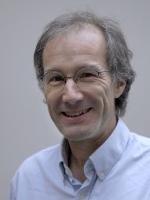
Philippe Moullier
GÉNÉTIQUE
Le Pr. Philippe Moullier est médecin néphrologue, professeur associé au département de génétique moléculaire et microbiologie de l’Université de Floride et dirigeait l’unité Inserm UMR-S 649 « Vecteurs viraux et transfert de gène in vivo » de Nantes.
Il a également été directeur scientifique de Généthon et a rejoint en 2015 les biotechs américaines Bamboo Therapeutics puis Viralgen.
En savoir plus
Travaux:
Philippe Moullier est un spécialiste des vecteurs viraux pour les thérapies géniques. En 1995, il crée le laboratoire de Thérapie Génique de Nantes qui développe des protocoles de transfert de gènes in vivo et les outils de production des vecteurs viraux nécessaires.
Il contribue notamment au succès en 2006 d'une thérapie ayant rendu la vue à des chiens atteint d'amaurose congénitale de Leber. Un essai clinique chez l'homme est en cours.
Le laboratoire va également fournir des vecteurs pour des essais cliniques sur la myopathie de Duchenne, et bien d'autres encore...
Par sa fonction de directeur scientifique du Généthon, Philippe Moullier est au cœur de la plupart des programmes actuels de thérapies géniques et un des instigateurs du projet PGT destiné à faire passer la production de vecteurs viraux au stade pré industriel.
Par ailleurs, il a assuré la co-direction scientifique de l’ouvrage : « La génétique science humaine » paru en 2004.
Instances:
Au début de sa carrière, Philippe Moullier a travaillé à l'institut Pasteur avec Olivier Danos et Jean-Michel Heard et aux États-Unis au Human Gene Therapy Institute de Philadelphie.
À la tête de son laboratoire de Nantes, il a établi un partenariat privilégié avec le Powell Gene Therapy Center à l'université de Floride.
Philippe Moullier est également expert à l’EMA (European Medicines Agency), à l’Afssaps (Agence Française de Sécurité Sanitaire des Produits de Santé) et membre du programme thérapie génique de la NHLBI (American National Heart, Lung and Blood Institute)
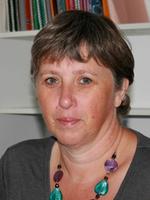
Janet Hall
ONCOGÉNÉTIQUE
Janet Hall était directrice de l'Unité Inserm U612 (Génotoxicologie, signalisation et radiothérapie expérimentale) basée à l'Institut Curie, spécialiste des processus de réparation des cassures de l'ADN dont le gène ATM est un des acteurs.
Son domaine de recherche concernait plus particulièrement les traitements anticancéreux à base de rayonnement, les réponses cellulaires activées suites à ces expositions et comment ses processus peuvent être exploités et modifiés pour améliorer les réponses cliniques.
En savoir plus
Travaux:
Depuis sa thèse obtenue à l’Université de Manchester en Angleterre, Janet Hall a travaillé dans le domaine de la réparation de l’ADN.
Elle a commencé ses travaux sur les bases moléculaires et génétiques de la sensibilité aux rayonnements ionisants, ainsi que les corrélations génotype/phénotype avec un intérêt particulier pour le rôle du gène ATM dans ces processus pendant son séjour au Centre International de Recherche sur le Cancer (CIRC/IARC).
Depuis son arrivée à l'Institut Curie, son laboratoire s'attache à continuer ces études et aussi à comprendre les effets des protocoles anticancéreux sur l'ADN des cellules, qu'elles soient cancéreuses ou saines. L'analyse de la réaction des cellules aux cassures de l'ADN induites par ces traitements, notamment par les radiothérapies, vise à les améliorer en évitant les dommages des tissus sains autour des tumeurs.
Instances:
Après plusieurs années au Centre International pour la Recherche sur le Cancer à Lyon où elle était chef de la DNA Repair Team, Janet Hall a rejoint Institut Curie en 2007 où elle est actuellement à la tête de l'Unité Inserm U612: Génotoxicologie, signalisation et radiothérapie expérimentale.
Elle participe activement à des études européennes sur les réponses aux faibles doses d’irradiation et des études moléculaires qui visent à comprendre les conséquences des mutations dans des gènes de la réparation de l'ADN comme le gène ATM.
Depuis son arrivée à Institut Curie, Janet Hall est beaucoup impliquée dans la formation des thésards et elle est membre du comité scientifique et pédagogique de l’école doctorale de cancérologie basée à l'Institut Gustave Roussy de Villejuif.
Enfin, elle participe aux évaluations des dossiers scientifiques pour plusieurs organismes de financement en France, en Angleterre et pour l’EU et aussi à la relecture des articles et publications scientifiques pour plusieurs journaux spécialisés.

Marc Tardieu
NEUROLOGIE
Le Pr. Marc Tardieu était chef du service de neuropédiatrie à l'hôpital Kremlin Bicêtre et professeur de neuropédiatrie à l'université de Paris Sud, spécialiste des maladies neurodégénératives. Il est à l'origine des premiers essais de thérapies géniques sur des maladies du cerveau.
En savoir plus
Travaux:
Les travaux de Marc Tardieu portent sur les maladies inflammatoires et infectieuses du cerveau chez l'enfant. Il a publié des articles en particulier sur le VIH-1, la sclérose en plaques, l'encéphalomyélite aiguë disséminée, le syndrome de l'activation des macrophages, les encéphalites herpétiques. Plus récemment, il a développé un essai intra-cérébral de thérapie génique et a récemment terminé une étude sur l'incidence et l'histoire naturelle des sous-types MPSIII (maladie de Sanfilippo).
Instances:
Le parcours de Marc Tardieu est international: Université Paris-Sud, Université Catholique de Louvain et Harvard Medical School, Boston. Il dirige l'unité INSERM 1012.